AI, Fintech & The Future: Key Insights from Data Science Salon NYC
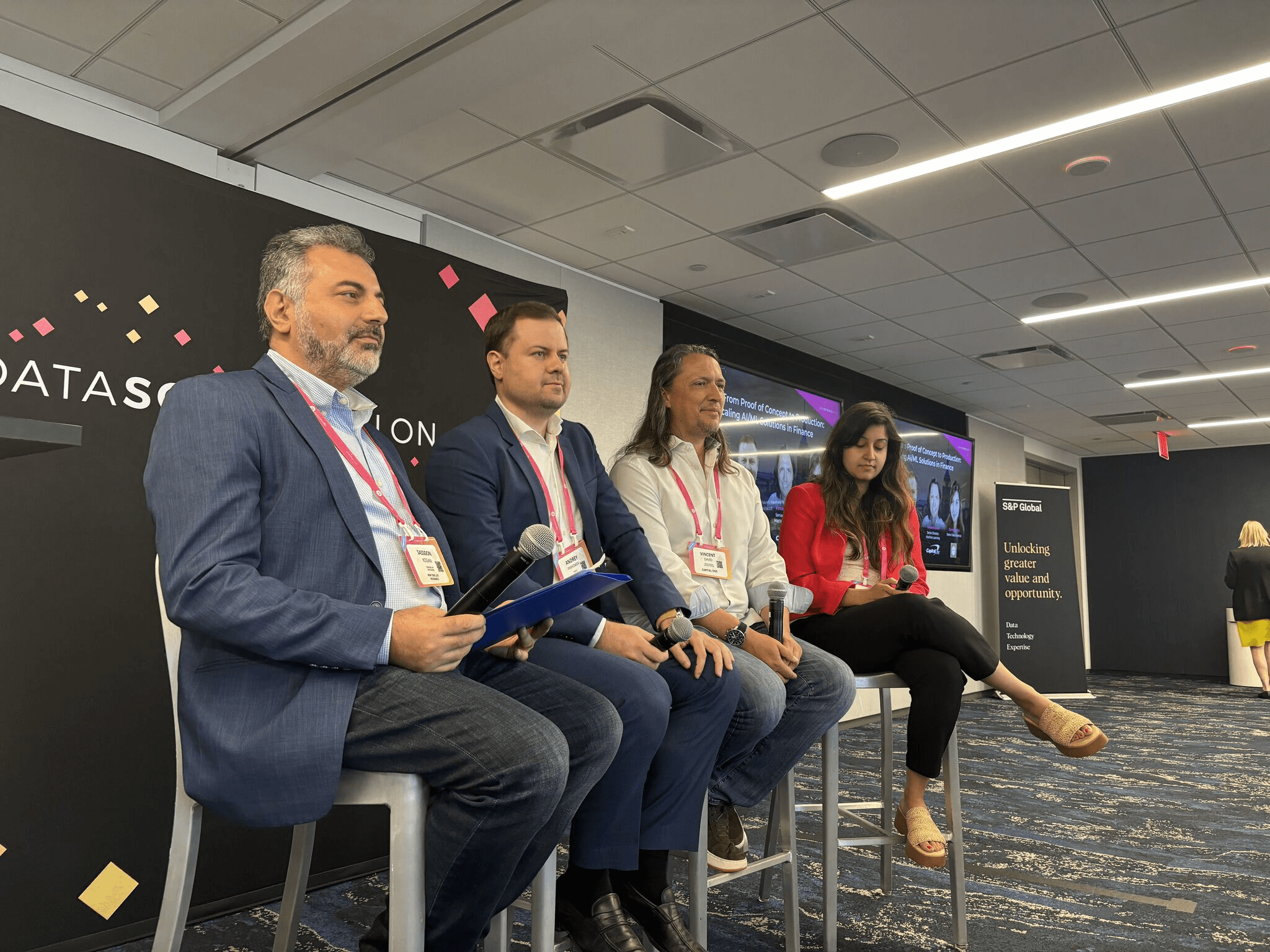
This past Tuesday, I had the pleasure of attending the Data Science Salon at the S&P Global HQ in NYC, and it was an absolute deep dive into machine learning and AI applications at the intersection of finance and technology. The event provided an incredible opportunity to connect with industry leaders, gain insights into emerging trends, and explore the most pressing challenges and opportunities shaping fintech today.
From LLM evaluations and scaling laws to credit risk modeling and topological data analysis, the sessions were packed with technical depth and forward-thinking perspectives that challenged conventional wisdom in AI and ML. Here are some of my key takeaways and highlights from this fantastic event.
Fintech the Nubank Way
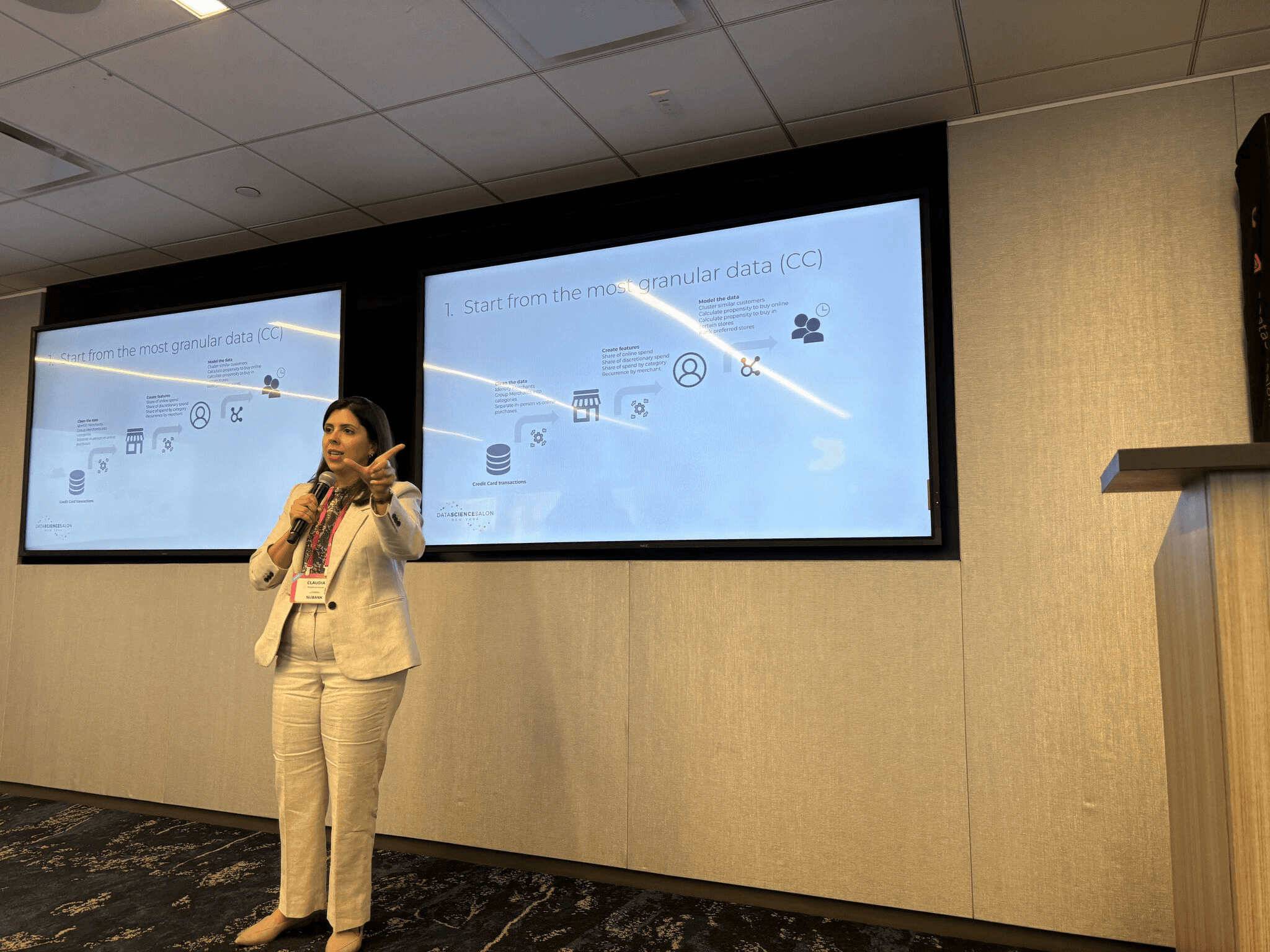
Claudia Pereira Johnson’s session was an eye-opening exploration of the emerging trends in fintech, offering a unique LATAM perspective drawn from her work at Nubank. She shared insights on hyper-personalized financial services, emphasizing the evolution of fintech from purely financial services to broader tech-driven ecosystems.
Key Takeaways:
The shift from “fintech to tech and from tech to fintech” – Financial services are increasingly merging with technology-first solutions, allowing for more adaptive, real-time consumer experiences.
AI-driven personalization – Nubank’s approach to hyper-personalization leverages ML models to predict customer needs and optimize financial products accordingly.
Regulatory complexities in fintech AI – The importance of balancing innovation and compliance, particularly in emerging markets.
Her talk reinforced the idea that fintech innovation is not just about financial transactions—it’s about creating seamless, intelligent user experiences that transcend traditional finance.
"Evaluation is all we need"
Jayeeta Putatunda’s keynote was a masterclass in evaluating large language models (LLMs). With the explosion of GenAI applications, ensuring rigorous evaluation frameworks is more critical than ever.
Key Takeaways:
“Evaluation is all we need” – A witty yet accurate play on the famous transformer paper title, highlighting how standardizing LLM benchmarks is the next frontier in AI research.
The challenge of LLM performance metrics – Many evaluation benchmarks fail to account for domain-specific nuances, leading to misleading performance indicators.
Ethical considerations in LLM evaluation – The risks of biased models, the importance of transparency, and how enterprises can build robust evaluation pipelines.
Her insights reinforced that model evaluation is not an afterthought—it’s a foundational pillar of responsible AI development.
Scaling Laws & Model Performance
Dr. Argyro (Iro) Tasitsiomi delivered an incredibly thought-provoking session that challenged assumptions about scaling laws, model performance, and data efficiency in AI.
Key Takeaways:
“More data ≠ more information” – A critical point that resonated deeply. Instead of blindly scaling models, we should focus on optimizing model architectures for existing datasets.
The importance of scaling laws in GenAI – Understanding the data-to-model size ratio is key to maximizing efficiency and minimizing computational waste.
Rethinking model efficiency – Instead of just making models bigger, we should aim to make them smarter, leaner, and more performant.
Her perspective was a refreshing departure from the “bigger is better” AI mindset and underscored the need for intentional model scaling strategies.
Topological Data Analysis in Finance
Dr. V. Zach Golkhou’s technical keynote introduced an often overlooked yet incredibly powerful approach—Topological Data Analysis (TDA).
Key Takeaways:
TDA is a game-changer for complex and noisy datasets – Particularly in finance, where volatility and unpredictability are the norm.
Why fintech needs TDA – Unlike traditional ML techniques, TDA can uncover hidden patterns in high-dimensional financial data.
The computational cost of TDA – One of the main barriers to adoption is its intensive computational requirements, but advances in cloud computing could change this.
Dr. Golkhou’s session was a reminder that cutting-edge ML isn’t always about deep learning—sometimes, alternative mathematical frameworks can unlock entirely new insights.
Credit Risk Scoring Models
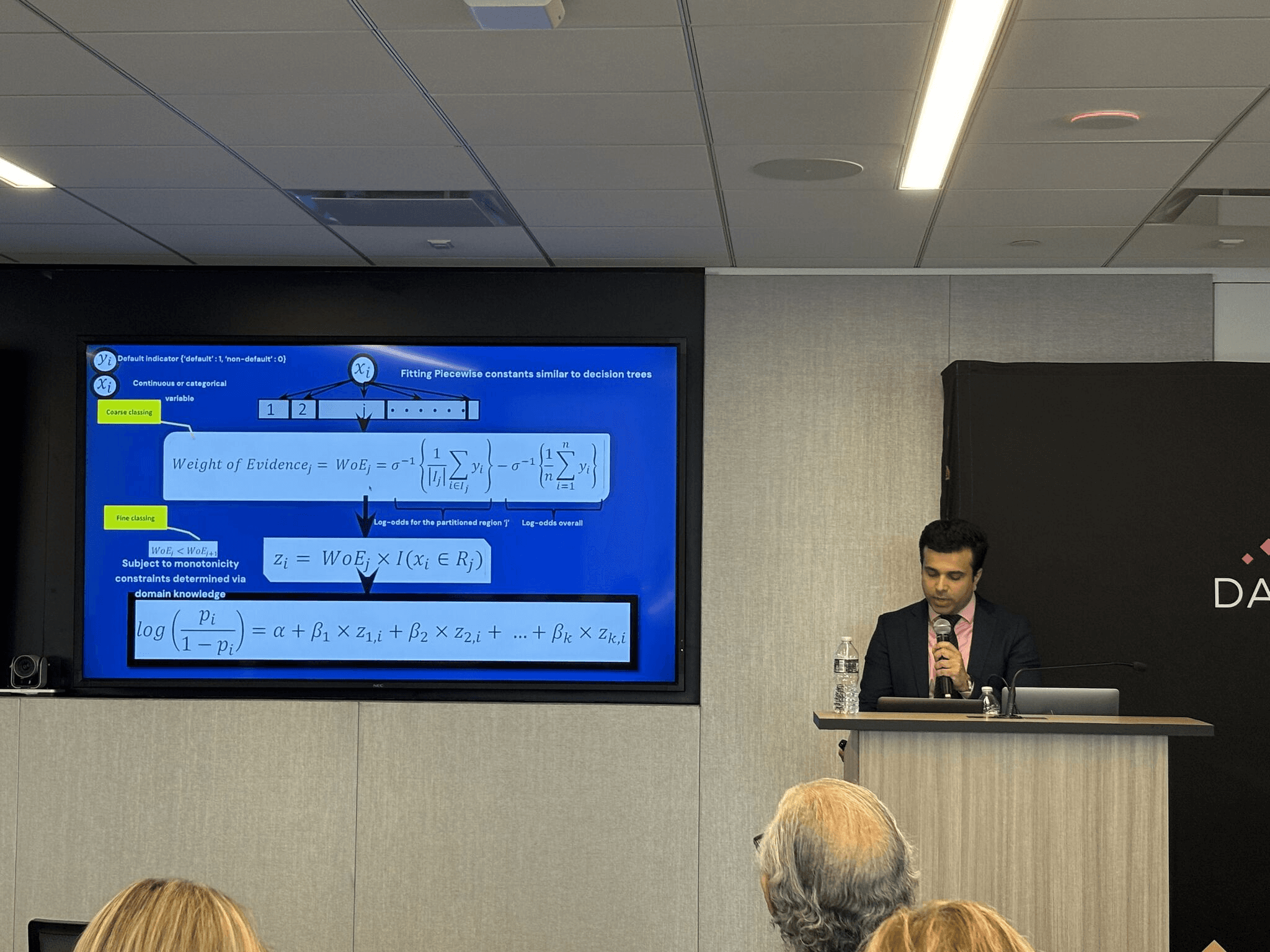
Varun Nakra’s talk on credit risk modeling was one of the most practical and technically rich sessions at the event. His holistic approach to understanding credit risk, model interpretability, and explainability was invaluable.
Key Takeaways:
Building interpretable credit risk models – How we can balance model accuracy with transparency, especially for regulatory compliance.
AI in credit scoring – Machine learning is revolutionizing how lenders assess risk, leading to fairer and more personalized lending decisions.
Future of risk modeling – The industry is moving toward hybrid models that combine traditional statistical methods with deep learning approaches.
Final Thoughts: Fintech, AI, and the Road Ahead
The Data Science Salon NYC was a fantastic reminder that the intersection of AI and finance is evolving at an unprecedented pace. The conversations, technical deep dives, and thought leadership all pointed toward one common theme: responsible, scalable, and explainable AI is the future of fintech.
A huge thank you to Anna Anisin and Tyler at DSSNYC for organizing such a brilliant event! Looking forward to the next one. 🚀