Overview
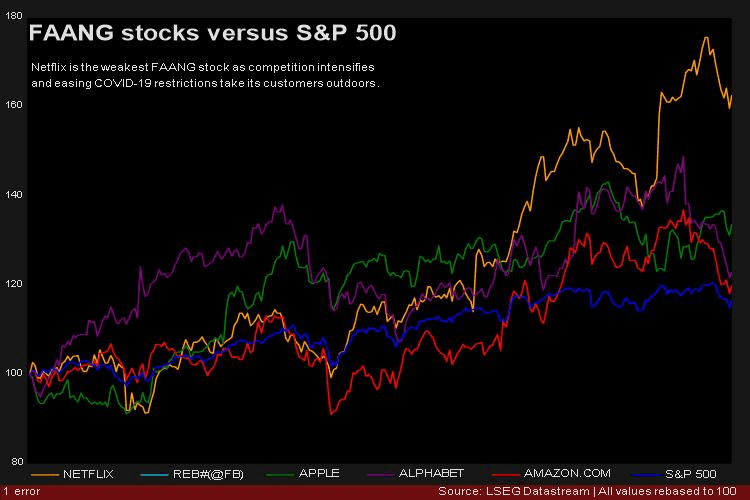
This self-initiated financial modeling project explores the feasibility of replicating the S&P 500 index’s performance using a subset of high-performing technology stocks—FAANG (Facebook, Apple, Amazon, Netflix, Google) plus Tesla (TSLA). The project applies time-series analysis, portfolio optimization, and statistical modeling to assess how closely this subset mimics the broader index.
Key technical components include:
Data Collection & Preprocessing:
Extracted historical stock price data using Yahoo Finance API.
Cleaned, structured, and normalized data using Pandas and NumPy.
Exploratory Data Analysis (EDA):
Visualized price trends, volatility, and rolling correlations using Matplotlib and Seaborn.
Examined individual FAANG+TSLA stock behaviors relative to the S&P 500.
Time-Series Modeling & Portfolio Construction:
Used logarithmic returns, moving averages, and rolling window correlations to analyze stock co-movements.
Constructed an optimized portfolio based on minimum variance and maximum Sharpe ratio allocations using SciPy’s optimization functions.
Performance Evaluation:
Compared FAANG+TSLA portfolio returns against the S&P 500 using cumulative return plots and risk-adjusted metrics (Sharpe Ratio, Beta, Alpha, R-squared).
Assessed tracking error and mean absolute deviation to measure replication accuracy.
The analysis provides insights into how concentrated exposure to top technology stocks aligns with broad market performance, evaluating the trade-offs in diversification, risk exposure, and return optimization.
Motivation Statement
This project stemmed from my interest in financial data science, quantitative investing, and portfolio optimization. The S&P 500 is often viewed as a benchmark for broad market exposure, but with technology dominating market capitalization, I was curious to explore whether a small subset of high-growth stocks could approximate the index’s performance.
This investigation aligns with my passion for data-driven decision-making in finance, applying quantitative methods to test market hypotheses. Beyond financial modeling, the project allowed me to refine my skills in time-series forecasting, portfolio risk analysis, and financial data visualization—critical components for both investment strategy development and AI-driven financial applications.
Reflections and Learnings
This project deepened my expertise in financial analytics, data-driven portfolio construction, and statistical modeling, with key insights including:
Concentrated Portfolios vs. Market Diversification:
FAANG+TSLA captures a significant portion of the S&P 500’s returns, but lacks sectoral diversification, making it more volatile and prone to market swings.
Optimizing Portfolio Weighting for Index Replication:
The maximum Sharpe ratio portfolio showed better risk-adjusted returns than equal-weighted allocations.
Time-Series Techniques for Market Analysis:
Understanding rolling correlations and tracking error helped quantify how well FAANG+TSLA aligns with S&P 500 trends over time.
Practical Applications in Financial Engineering:
The ability to analyze market proxies, tracking error, and performance attribution is valuable for ETF replication, hedge fund strategies, and systematic investing models.
This project reinforced my passion for quantitative finance, AI-driven portfolio analysis, and financial modeling, and I plan to continue exploring machine learning applications in market prediction and systematic investing strategies.